

Beard butter often gets grouped with balm or treated as a lighter version of oil, which makes it easy to misunderstand. For some men, it becomes a quiet staple. For others, it never earns its place in their routine. The difference usually comes down to what problem it’s being asked to solve.
For me, beard butter only made sense once my beard reached a couple of inches in length. Before that, beard oil was enough. After that point, the hair itself started to feel dry and slightly wiry when left alone, even though the skin underneath was fine. Beard butter filled that gap.
Beard butter isn’t a styling product in the traditional sense, and it isn’t a treatment for growth or skin issues. What it actually does is improve how a beard feels and behaves over time, particularly as the beard grows longer.
What Beard Butter is Designed For
Beard butter works primarily at the hair level, not at the follicle and not deep within the skin.
As a beard grows longer, natural oils struggle to travel down the full length of the shaft. Even straight-growing beards can start to feel dry or coarse, especially overnight or after washing. That was exactly the point where oil alone stopped being quite enough for me.
This is also why butter tends to show up later in a routine than oil or washing. If you are still in the early stages, focusing on how often you wash your beard usually matters far more than adding another product.
How Beard Butter Changes the Way a Beard Feels
The main role of beard butter is to soften the beard. Used consistently, it reduces the dry, brittle feel that often appears as length increases. Hair becomes more flexible and easier to brush through, and the beard feels calmer rather than stiff.
In my case, that flexibility is usually enough on its own. My beard grows fairly straight, so I rarely need the structure and hold of beard balm. Beard butter gives me just enough natural settling without making the beard feel coated or over-styled, which is why I reach for it far more often than balm.
The Science Behind Beard Butter
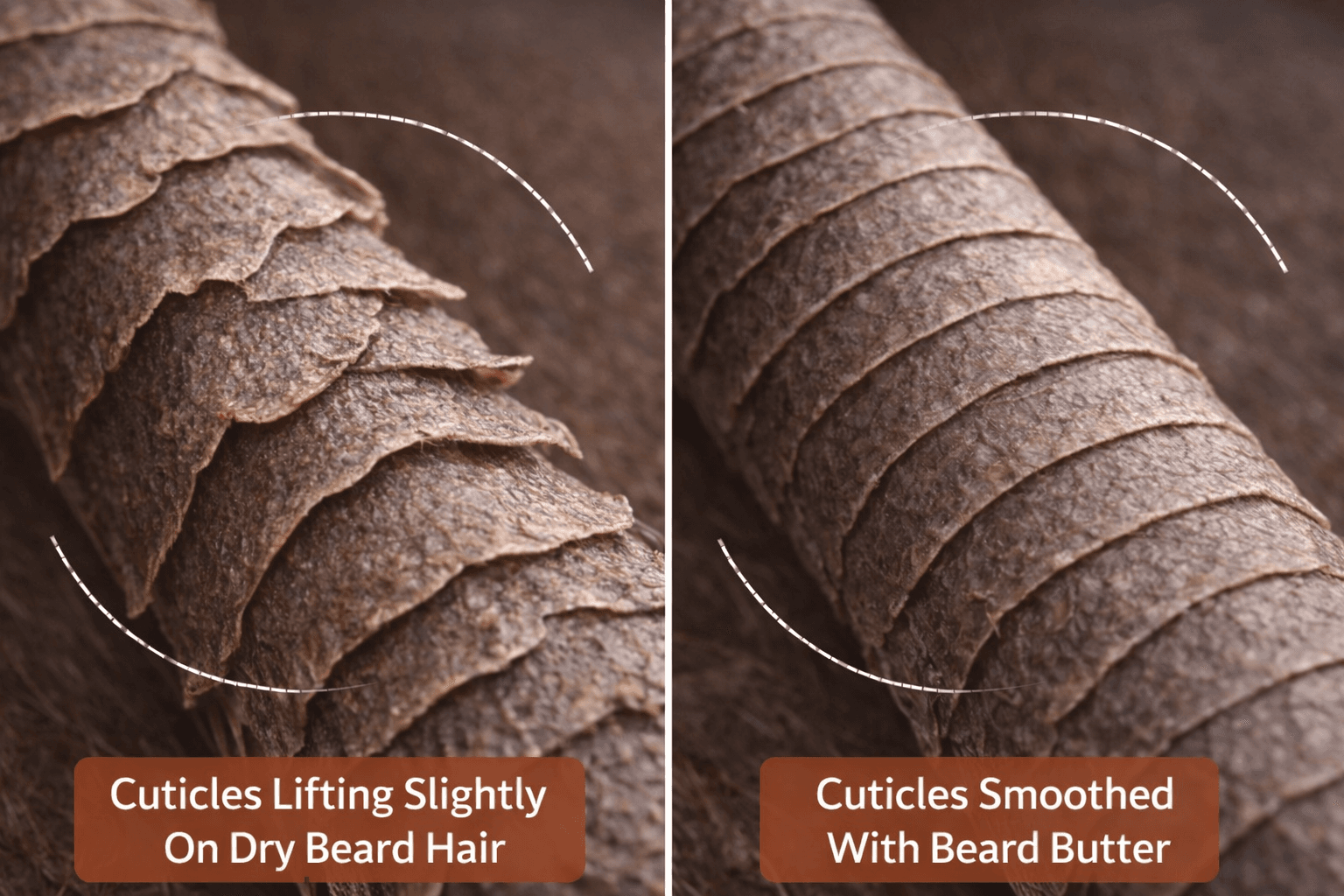
At a structural level, beard butter works on the hair’s outer surface. Beard hair is covered by a cuticle layer made up of overlapping scales. When hair is dry, those scales lift slightly. That increases friction between individual hairs, which is why a beard starts to feel coarse or wiry rather than soft.
The soft butters used in beard butter coat the hair shaft and help those cuticle scales lie flatter. This reduces surface roughness and allows hairs to slide past one another more easily. Nothing about the hair itself is repaired or changed, but the way it behaves improves.
Beard butter also creates a light occlusive layer that slows moisture loss. It doesn’t add moisture, but it helps retain what’s already there, which is why it works best after washing or on slightly damp hair.
How Beard Butter Fits into My Routine
I only ever use beard butter at night. After a shower, I apply oil first and let it sit for around ten minutes. Once that has absorbed, I work a very small amount of butter through the beard, roughly a fingernail-sized amount. Used this way, it keeps the beard feeling softer and less dry, and makes it easier to style the next day without needing heavier products.
I have never found a reason to stop using it, because it consistently solves the one problem I use it for, preventing that dry, wiry feeling once length increases.
What Beard Butter Doesn’t Do
Beard butter doesn’t improve beard growth or density. It doesn’t fix irritation, flaking skin, or inflammation. It also doesn’t provide meaningful daytime hold.
If itch is present, the issue is usually skin-related. In those cases, addressing beard itch and skin health matters far more than adding conditioning layers on top.
When Beard Butter is Unlikely to Help
Butter usually adds little value when the beard is still short, when oil already keeps everything comfortable, or when shape and flyaways are the main concern.
If you can grab a handful of beard hair and it still feels soft and flexible, you are probably not there yet. If it feels dry, slightly stiff, and wiry, you have usually hit the butter phase. Before that stage, butter often feels like an extra step rather than a solution.
The Takeaway
Beard butter doesn’t control a beard, and it doesn’t change how it grows. What it does is reduce friction, smooth the hair cuticle, and slow moisture loss. Over time, that makes beard hair feel softer, more flexible, and easier to live with.
For me, it earns its place because it solves a very specific problem. Once my beard reaches a certain length, it no longer feels dry and wiry when I use it regularly. If that’s not an issue you have, you may never need it at all.