

Minoxidil is one of the most talked-about beard growth products online, and one of the most misunderstood. Depending on where you look, it is either presented as a near guaranteed fix for patchy growth or dismissed as pointless and risky.
The truth sits somewhere in the middle. Minoxidil can help some men grow more facial hair, but results are unpredictable, off-label, and largely shaped by biology rather than effort. Many people start using it without understanding what it can realistically do, or what the trade-offs are.
Understanding how beard growth actually works makes it much easier to judge where minoxidil fits, and where it doesn’t.
The Direct Answer
Yes, minoxidil can promote beard growth by prolonging the growth phase of existing hairs. Results vary widely, depend on individual biology, and are not guaranteed. Its use on facial hair is off-label and should be approached with realistic expectations.
Medical Disclaimer
Minoxidil is not approved specifically for facial hair growth. This article explains how it is commonly discussed and used in practice, alongside current scientific understanding. It’s not a recommendation or treatment plan. If you have existing skin conditions, cardiovascular issues, or concerns about topical medications, seek medical advice before using minoxidil.
How Minoxidil Works and What It Was Designed For
Minoxidil was originally developed as a treatment for high blood pressure. During early trials, increased hair growth was noticed as a side effect. That observation eventually led to its topical use for hair loss on the scalp.
It was never designed for beards. Its use on facial hair is not what it was made for, even though it is widely discussed online. That distinction matters because it explains why evidence is limited and why the digital success stories are often outliers, not the rule.
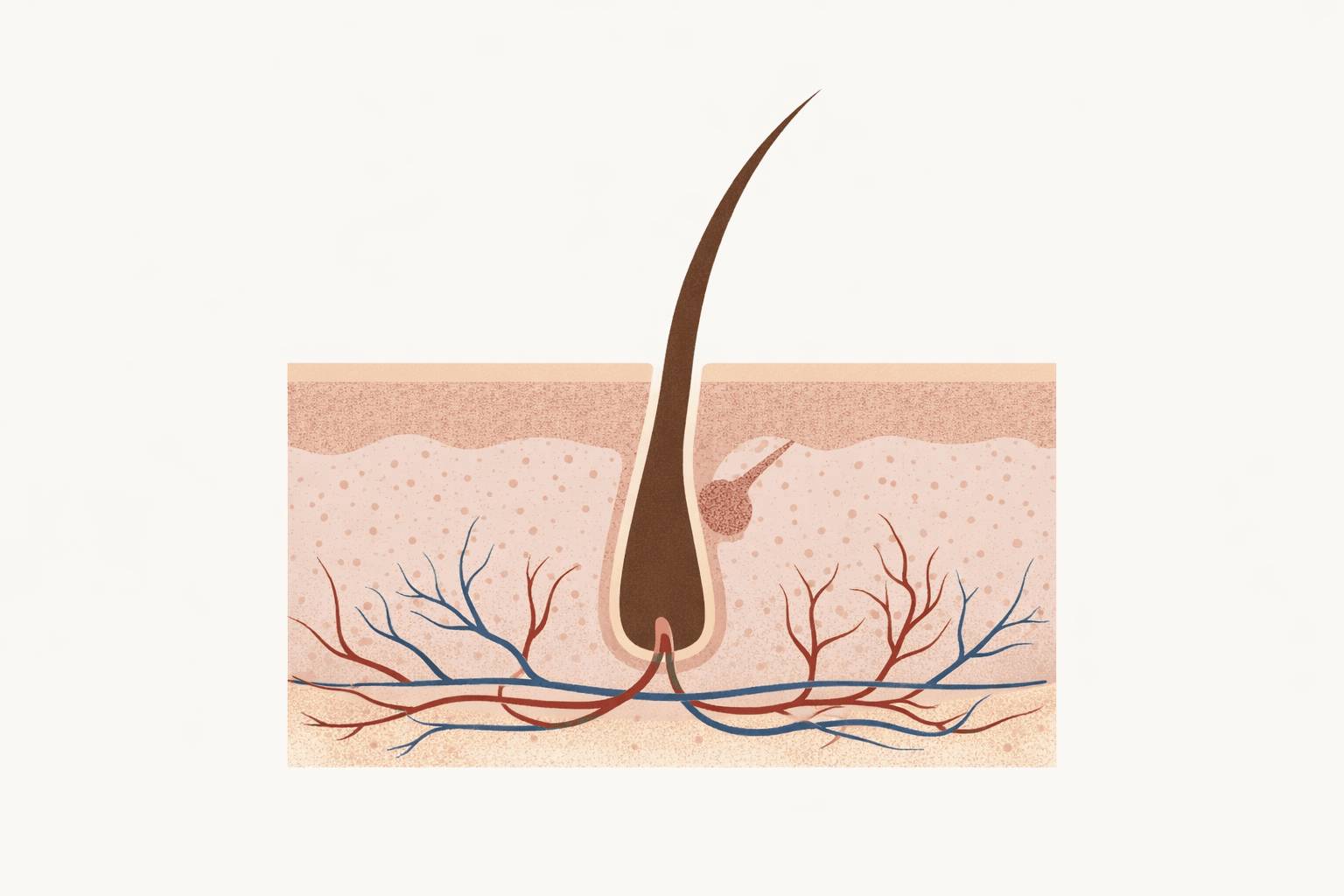
Minoxidil doesn’t create new hair follicles. You are born with all the follicles you will ever have, including those on your face.
What it does instead is more subtle. Minoxidil widens the tiny blood vessels that feed a follicle. This widening, known as vasodilation, increases local blood flow and can keep a hair in its active growth phase longer than it otherwise would be. For some follicles, that extra time is enough to turn a weak hair into a thicker hair. For others, nothing changes at all.
In reality, if the follicle isn’t capable of producing a beard hair, minoxidil can’t create one for you.
Why It Works for Some Men and Not for Others
This is not about motivation or discipline. It comes down to biology. One of the clearest explanations involves an enzyme in the hair follicle called sulfotransferase. Minoxidil only becomes active when the skin converts it. If your skin doesn’t do that efficiently, the results are limited, no matter how consistent you are.
You can’t train this or influence it with technique. It is largely genetic. This is why two men can follow the same routine for the same period of time and end up with completely different outcomes.
Vellus, Transitional, and Terminal Beard Hair
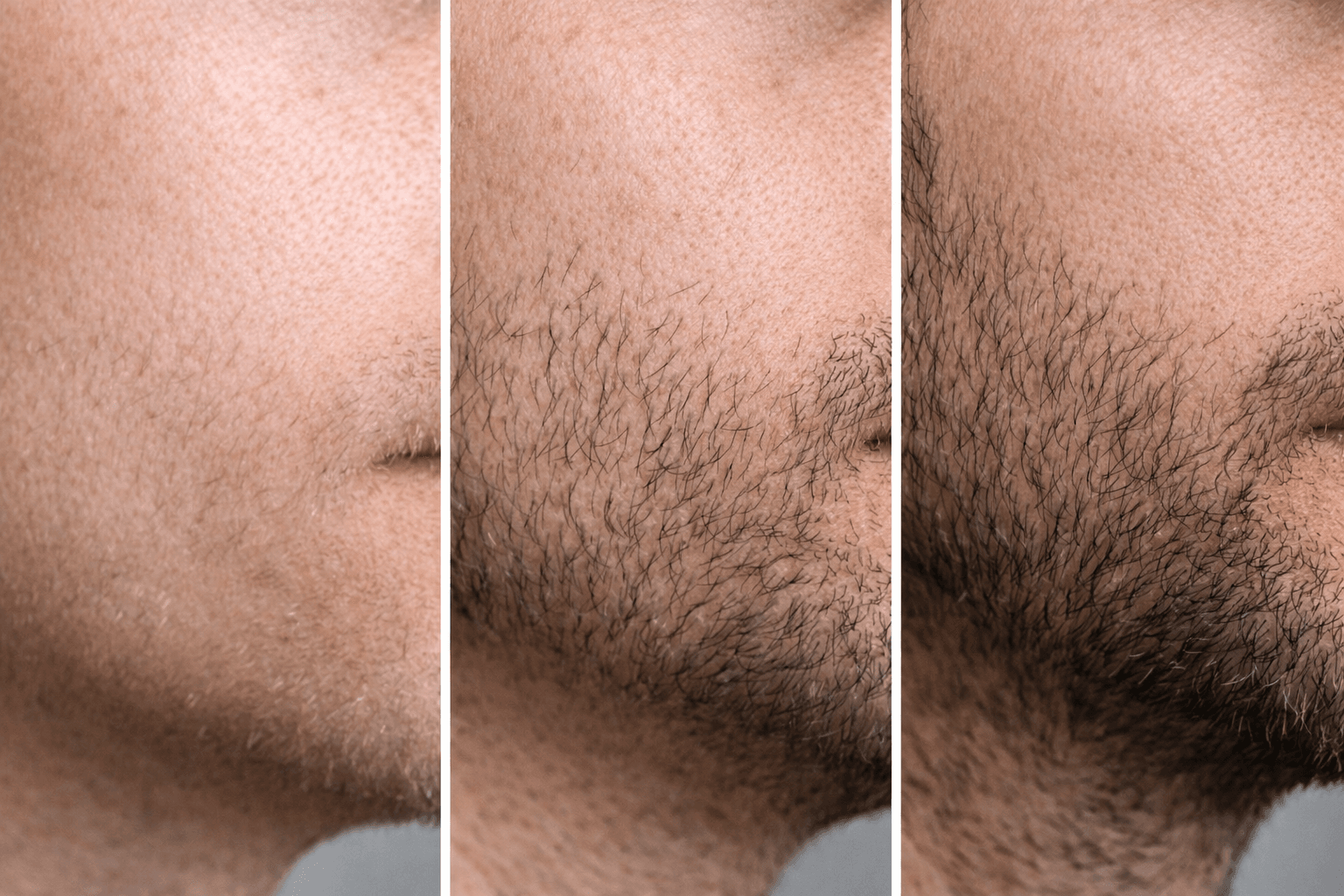
Beard hair develops in stages. Vellus hair is soft, light, and often described as peach fuzz or bum fluff. Transitional hair is darker and more visible, but still thin and inconsistent. Terminal hair is thick, coarse, and permanent.
Minoxidil appears to support the transition between these stages in some follicles. It doesn’t skip stages or force hairs to become terminal if they are not biologically ready.
This is why early changes often look underwhelming, and why meaningful results, when they happen, take months rather than weeks.
The Science: Clinical Evidence vs Real World Use
There is limited but credible evidence that going the chemical route can increase your beard density. Small studies and clinical observations show improvements in beard coverage with prolonged use. However, there are important limits to what we know.
- Most studies have small sample sizes, making it hard to apply the results to every man.
- While we know a lot about using it on the scalp, long-term data specifically for facial skin is limited, so we don’t fully know the effects of applying it to the face for years at a time.
- Most of the ‘proven’ facts you see online are actually borrowed from scalp hair research; the beard is a different environment with different hormones, so the results don’t always translate 1:1.
There is evidence of effect. There isn’t the level of certainty many online guides imply.
Side Effects That Matter on the Face
Facial skin isn’t scalp skin. It is thinner, more reactive, and far less forgiving. Most minoxidil solutions are alcohol based. Repeated daily exposure can strip moisture from the skin barrier over time, especially around the mouth and chin. Common issues reported with facial use include dryness, flaking, redness, irritation, and itching. Some people also experience temporary shedding early on.
If the skin becomes chronically inflamed, growth usually stalls rather than improves.
Less commonly, systemic effects such as dizziness or heart palpitations are reported. These are rare, but they are not impossible.
Minoxidil Reality Check
Most people who stop using minoxidil don’t stop because nothing happened. They stop because their skin can’t take it long-term.
I have seen men make progress, then step back because persistent dryness and irritation became more of a problem than patchy growth. When the skin barrier is compromised, everything else tends to follow.
Liquid vs Foam and Why People Care
This is one of the few formulation differences that genuinely matters for facial use.
| Form | Key Difference | Why it Matters on the Face |
| Liquid | Contains propylene glycol | More likely to cause dryness, flaking, and irritation |
| Foam | No propylene glycol | Generally better tolerated by facial skin |
Most “minox flake” complaints come down to this difference alone. It is not that minoxidil suddenly stops working; it is that the skin barrier starts to fail under repeated exposure.
Will You Lose the Beard If You Stop?
Terminal hairs that fully mature often remain. Softer hairs may shed. The problem is timing. Stopping too early can make it feel like everything disappears, when in reality, many hairs were not yet established.
There is no universal rule. Retention varies by individual and by how long the hair had time to mature.
Where Minoxidil Fits in Beard Growth Reality
Minoxidil is often introduced too early. Natural beard development can continue into the late twenties and beyond. What looks like a permanent patchiness at 21 can look very different at 28.
Understanding how beard growth actually works, including timelines and genetic limits, should come before experimenting with chemical growth aids.
Think of minoxidil as your last lever to pull, not your starting point.