


A beard brush is not a styling accessory. It is a control tool.
Most men buy the wrong brush because they think brushing is about making the beard look neat in the moment. It is not. Brushing is about training direction, distributing oil, and reducing the friction that leads to breakage. The wrong brush makes all three harder.
This guide explains how to choose a beard brush based on your beard’s current needs, and why that choice matters more than most men realise.
What a Beard Brush Actually Does
A functional beard brush performs three essential tasks.
- Trains direction. Repeated, light brushing teaches hair where to sit. Over time, this influences your silhouette more than trimming ever will.
- Distributes oil. It moves natural sebum and applied beard oil from the skin into the lengths, where dryness and breakage usually start.
- Neutralises static. Natural bristles reduce the frizzy, frantic look caused by static electricity from plastic tools.
If brushing causes pain, flakes, or makes the beard puff out, the brush is wrong for your beard.
Bristle Type: The Most Important Decision
The bristles matter more than the handle, the shape, or the brand.
Boar Bristle (The IronMane Standard)
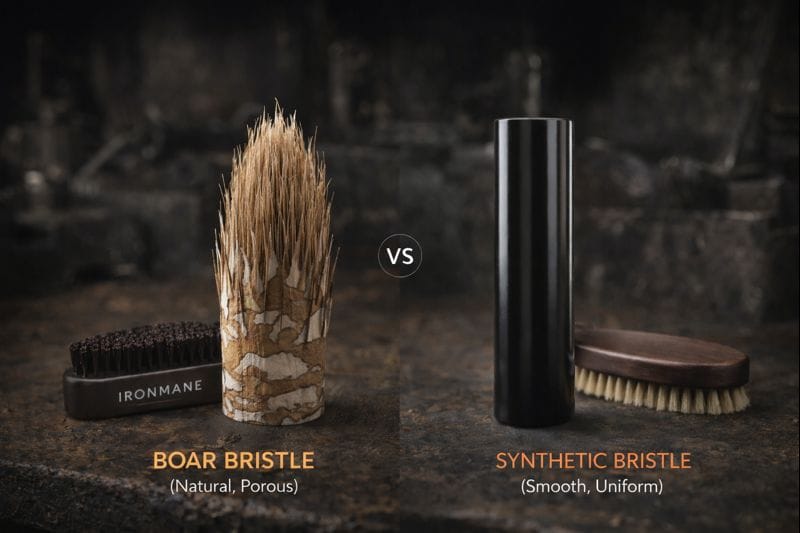
Boar hair is the gold standard because its microscopic, scale-like structure closely resembles human hair.
Why it works: these scales trap oil and carry it down the hair shaft rather than pushing it across the surface.
The benefit is balance. Boar bristle is firm enough to move hair and train direction, but has enough give to avoid tearing the cuticle or irritating the skin.
Synthetic Bristle
Synthetic brushes vary widely in quality.
They can work for men with extreme skin sensitivity or those who prefer a vegan option, but they are less forgiving.
The risk is inconsistency. Many synthetics are either too smooth to distribute oil properly or too stiff, causing micro-scratches on the skin and unnecessary irritation.

The Plastic Warning
Nylon or hard plastic bristles are not beard brushes. They are scalp brushes.
Avoid them entirely. They snap beard hairs, scratch skin, and increase breakage. If the bristles bend your skin before they bend themselves, they are too aggressive.
Brush Firmness: Match the Beard, Not the Label
Firmness should scale with beard length and density.
- Stubble and short beards: softer bristles to protect the skin barrier
- Medium or corporate-length beards: medium firmness for balanced oil distribution and control
- Long or dense beards: longer, firmer bristles that can reach through the bulk to the skin
Too soft does nothing. Too stiff causes irritation. Most brushing problems come from choosing a brush harsher than necessary.
IronMane Insight: Stiffness Is Not Strength
Many men buy extra-firm brushes because they associate stiffness with toughness. In reality, overly stiff bristles act like sandpaper on the hair cuticle.
Control comes from repetition, not force. The bristles should yield to the hair, not the other way around.
The Exfoliation Trap
Brushing does remove dead skin, which is healthy. The problem is overdoing it.
If you see white dust or flakes immediately after brushing, you are not cleaning the beard. You are damaging the skin barrier. Reduce pressure. If flaking continues, your brush is likely too stiff for your current length.
Healthy brushing should calm the skin, not provoke it.
Brush vs Comb: Know the Difference
Brushes and combs are not interchangeable.
- Combs detangle and separate
- Brushes train direction and distribute oil
The rule is simple. If the beard is tangled, use a wide-tooth comb first. Brushing a tangled beard causes breakage and unnecessary pain.
Maintenance and Frequency
Once or twice per day is enough.
Brush after applying oil or once the beard is fully dry. If your beard looks puffier or more irritated after brushing, you are brushing too often or too aggressively.
Clean your brush every few weeks. A brush clogged with old oil and skin cells becomes a source of bacteria. Wash it with mild soap and let it dry bristles-down.
Summary Comparison
In practice, brush choice should scale with beard length and density, not brand claims.
| Beard Stage | Recommended Brush | Primary Goal |
|---|---|---|
| Stubble / Short | Soft boar or soft synthetic | Skin comfort and oil distribution |
| Corporate Short | Medium boar bristle | Training direction and reducing frizz |
| Long / Dense | Firm boar bristle (longer bristles) | Reaching the skin through the bulk |
Final Advice: Control Without Force
The right beard brush does not dominate the beard. It guides it.
Choose a brush that works with your beard as it is today, not the beard you hope to have in six months. Direction improves with consistency, not pressure.
A calm, well-distributed beard always projects more authority than one that has been forced into submission.


