


Beard styles are often discussed in terms of trends, but most styles fall into a small number of established categories. Understanding what each beard style actually is, how it is defined, and what level of maintenance it requires makes choosing a beard style far more straightforward.
This guide explains common beard styles in practical terms. Rather than browsing endless variations, it helps you narrow your options by understanding how different beard styles work, what they demand day to day, and who they are best suited for.
The right beard style works with your growth pattern, your routine, and your lifestyle.
Core and Foundational Beard Styles
Foundational beard styles are defined mainly by length and coverage rather than detailed shaping. They form the base from which most other beard styles develop.
Clean Shaven
Clean-shaven refers to the absence of visible facial hair. Maintaining this look requires regular shaving to keep the skin smooth and prevent irritation.
It suits men who prefer a sharp, uniform appearance, but it offers no flexibility for shaping or adjusting facial proportions.
Light Stubble
Light stubble usually represents one to three days of growth. It adds texture and contrast without forming a defined beard shape.
While it appears low commitment, it requires frequent upkeep to remain even. Without regular trimming, it can quickly look untidy.
Heavy Stubble
Heavy stubble sits between light stubble and a short beard. It offers more coverage and can add definition to the jaw while remaining relatively short.
This beard style requires trimming every few days to maintain balance and prevent uneven growth from becoming noticeable.
Short Beard
A short beard is fully formed but kept close to the face. Length is controlled, and the beard provides structure without significant bulk.
This is one of the most versatile beard styles. It suits many face shapes and balances appearance with manageable maintenance.
Medium Beard
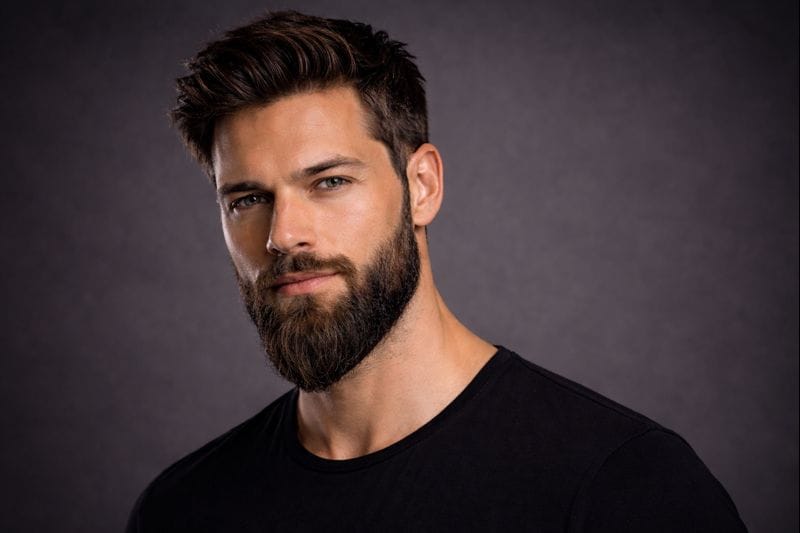
A medium beard has clear length and volume but stops short of extended growth. At this stage, shape becomes more important, particularly around the neckline and cheeks.
Regular grooming and occasional trimming are needed to maintain structure and avoid a loose or unbalanced appearance.
Full Beard
A full beard allows natural growth across the face and jaw with minimal restriction on length. Density and final shape depend heavily on genetics and grooming habits.
This beard style requires patience and consistent care, with an emphasis on managing volume rather than frequent reshaping.


Classic Shaped Beard Styles
Classic-shaped beard styles often build on foundational beard lengths but introduce defined outlines, separations, or contours. These beard styles rely more heavily on trimming precision and ongoing maintenance.
Goatee
A goatee focuses hair growth on the chin, with the cheeks typically kept clean. It draws attention to the lower face and can help add definition to the chin area.
Precise trimming is required to maintain balance and avoid an uneven or exaggerated shape.
Extended Goatee
An extended goatee connects the chin beard to the moustache while keeping the cheeks clear. It offers more coverage than a standard goatee while retaining definition.
This beard style suits men who want structure without committing to full cheek growth.
Circle Beard
The circle beard combines a rounded goatee with a connected moustache, forming a continuous shape around the mouth.
It requires regular detailing to keep edges clean and maintain symmetry as the beard grows.
Van Dyke
The Van Dyke features a detached moustache paired with a pointed goatee. Clear separation between elements defines the style.
Maintenance is essential, as uneven growth or blurred edges quickly disrupt the intended look.
Balbo Beard
The Balbo beard combines a separated moustache with a shaped chin beard and minimal cheek coverage. It creates a defined, angular appearance.
This beard style works best with consistent chin growth and requires careful trimming to maintain structure.
Ducktail Beard
The ducktail beard tapers to a point at the chin while remaining fuller through the cheeks and jaw.
It suits longer beard styles and benefits from controlled trimming to shape the taper without creating excessive bulk.
Short Boxed Beard
The short boxed beard is neatly trimmed with defined edges along the cheeks and jaw. Length is kept short and even throughout.
This beard style is commonly chosen for professional settings due to its tidy, intentional appearance.
Long Boxed Beard
The long boxed beard retains the same defined outline as the short boxed beard but allows more length through the body of the beard.
Consistent shaping is required to prevent the beard from appearing overgrown or losing its outline.
Practical and Lifestyle Beard Styles
These beard styles are defined less by strict shape and more by real-world considerations such as maintenance level, growth pattern, and daily routine.
Low-Maintenance Beard Style
Low-maintenance beard styles prioritise natural growth with minimal shaping. Lines are kept soft, and trimming is infrequent.
This approach suits men who want a beard presence without committing to regular detailing or precision grooming.
Professional Beard Style
A professional beard style is trimmed to appear tidy, balanced, and intentional. Length is controlled, and lines are kept natural rather than sharply defined.
The focus is on presentation and consistency rather than bold shaping or standout length.
Beard Styles for Patchy Growth
Beard styles designed for patchy growth work with uneven density by keeping length shorter and shapes softer. Aggressive trimming is avoided to prevent exposing thinner areas.
The goal is visual balance rather than symmetry.
Beard Styles for Receding Hairlines
Beard styles for receding hairlines often emphasise fullness around the jaw and chin to help balance overall proportions.
These styles focus on structure and controlled shaping rather than maximum length.
Choosing the Right Beard Style
There is no single beard style that works for everyone.
The best beard style depends on your growth pattern, maintenance tolerance, and how you want your beard to function in daily life. A practical beard style that fits your routine often delivers better long-term results than a more complex style that requires constant adjustment.
This guide provides a reference point for understanding common beard styles. More detailed guides explore how to trim, shape, and maintain each beard style properly over time, helping you choose a beard that is sustainable as well as well-suited to you.


