


Beards do more than change how much hair you have on your face. They change how your face is read visually. Small differences in shape, length, and balance can make the same beard look structured on one person and bulky on another.
This is not about hiding weight or correcting your face. It is about proportion. Once you understand how beard shape affects width and length, you can adjust what you already have rather than chasing a completely different style. Seeing how different beard shapes behave in practice often makes these adjustments feel far more intuitive.
Why Beard Shape Changes How Your Face Looks
A beard adds structure to the lower half of the face. That structure influences how width and length are perceived, particularly around the cheeks, jaw, and chin.
When a beard carries most of its visual weight outward, the face tends to look broader. When shape and length are drawn downward, the face appears longer and more tapered. Nothing is actually being slimmed, but the eye is guided in a different direction.
A simple way to think about it is balance. If a beard looks wider than it is long, the face usually reads rounder. When the length from the lip to the bottom of the beard outweighs side to side width, the face reads slimmer.
What Makes a Face Look Wider or Slimmer
Faces appear wider when attention is pulled horizontally. This often happens when beard weight sits high on the cheeks, when the sides are left full with no taper, or when shapes end abruptly with blunt edges.
Faces appear slimmer when attention moves vertically. Length under the chin, controlled sides, and softer transitions encourage the eye to travel downward rather than across.
Surface area matters too. A solid block of hair reads wider than a shape that introduces separation or contrast. This is why some beards feel heavier visually even when they are not especially long.
Beard Characteristics That Create a Slimmer Look
A slimming effect doesn’t come from a specific named style. It comes from a few characteristics working together.
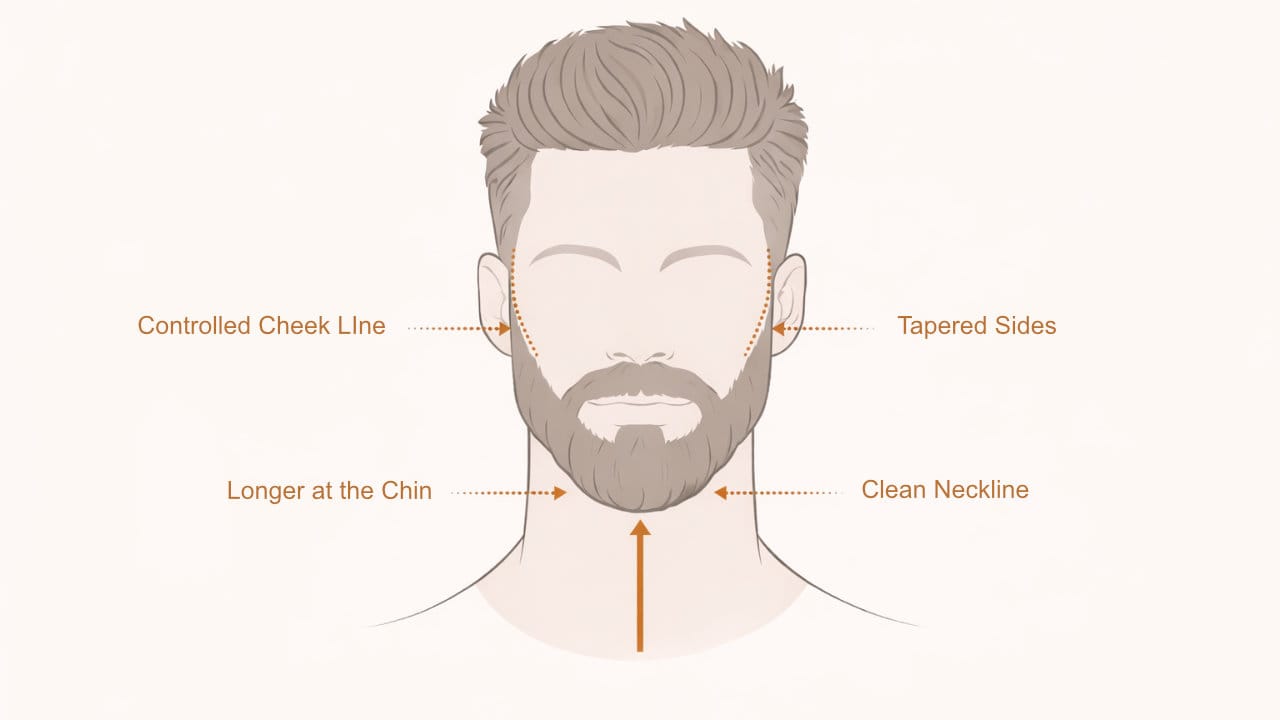
Tapered or faded sides reduce the weight line at the widest part of the face. This is one of the most effective adjustments, even on relatively short beards. It is usually achieved through regular trimming rather than dramatic fades.
A controlled cheek line prevents volume from creeping too high. When the weight line sits lower on the jaw instead of spreading across the cheeks, the face looks more structured.
Length under the chin creates vertical emphasis. This doesn’t mean extreme length, just slightly more length at the bottom than through the sides.
Soft transitions matter more than sharp boxes. Gradual changes guide the eye downward, while harsh edges tend to widen the outline of the face.

Beard Styles That Make the Face Look Slimmer
Some styles naturally apply these principles, which is why they tend to work more reliably than others.
A tapered or faded full beard keeps the sides tight while allowing length to build underneath. The result feels balanced rather than styled, and it creates a clear vertical flow similar to many modern and low-maintenance beard styles.
Shorter sides paired with an elongated profile through the chin work well at moderate lengths. Even a subtle difference between side length and chin length can change how the face is read, particularly during active growth.
Styles that separate the moustache from the chin, such as Van Dyke or Balbo shapes, can also be effective. Exposing skin on the sides of the chin creates a narrow vertical strip of hair that draws the eye straight down the centre of the face.
Structured stubble can achieve a similar effect when cheek lines are clean, and sides are controlled. Stubble worn evenly all over tends to emphasise width more than stubble that has been deliberately shaped.
Beard Styles and Choices That Add Width, and Why
Some beard choices add width simply because of how they distribute visual weight.
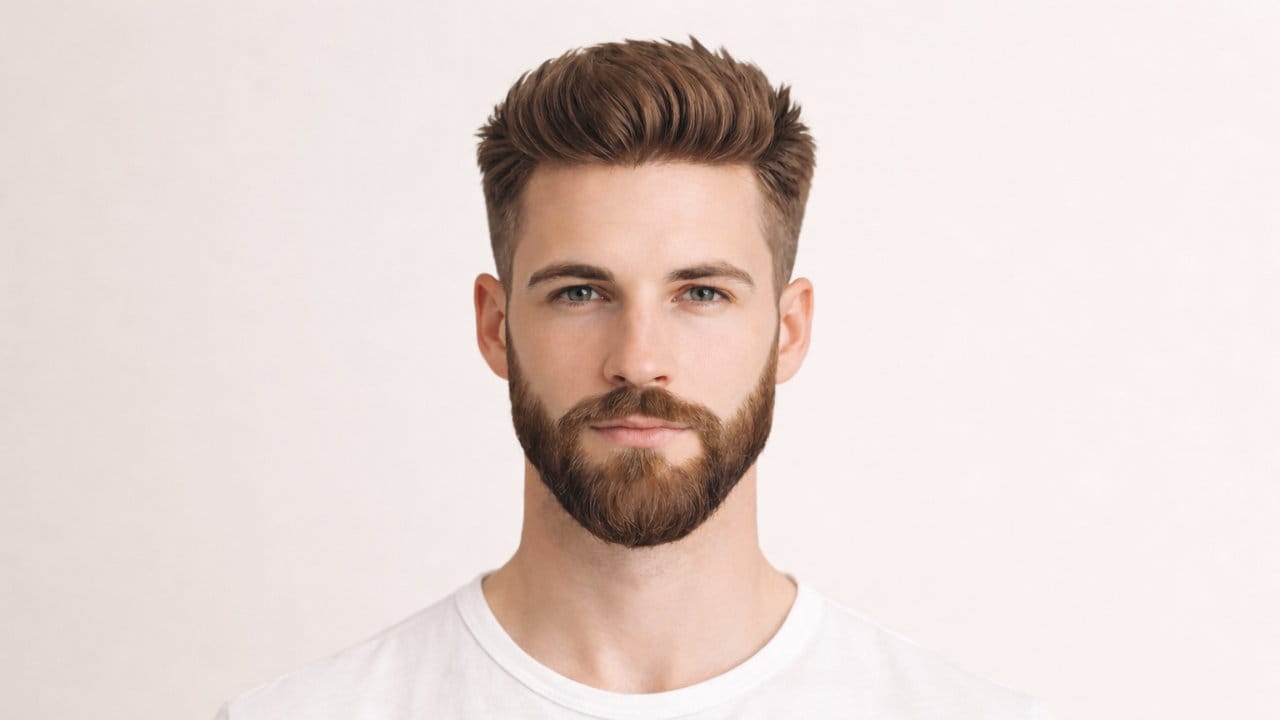
Very full sides with no taper place bulk at the widest part of the face. Even at shorter lengths, this can make the face appear broader.
Boxed beards with blunt bottoms interrupt vertical flow. When the bottom edge is flat, the beard reads as a block rather than a shape, which emphasises width.
Low cheek lines increase outward volume. Heavy coverage high on the cheeks pulls attention sideways rather than downward.
The moustache also plays a role. When it is very wide or bushy and extends past the corners of the mouth, it acts as a horizontal bar that draws the eye outward.
Keeping the same length all over removes contrast. Without variation between sides and bottom, the beard frames the face instead of shaping it.
None of these choices are wrong. They simply do not support a slimmer visual profile.
How to Adjust Your Current Beard Without Changing Styles
Most people do not need a new beard. Small adjustments usually go further.
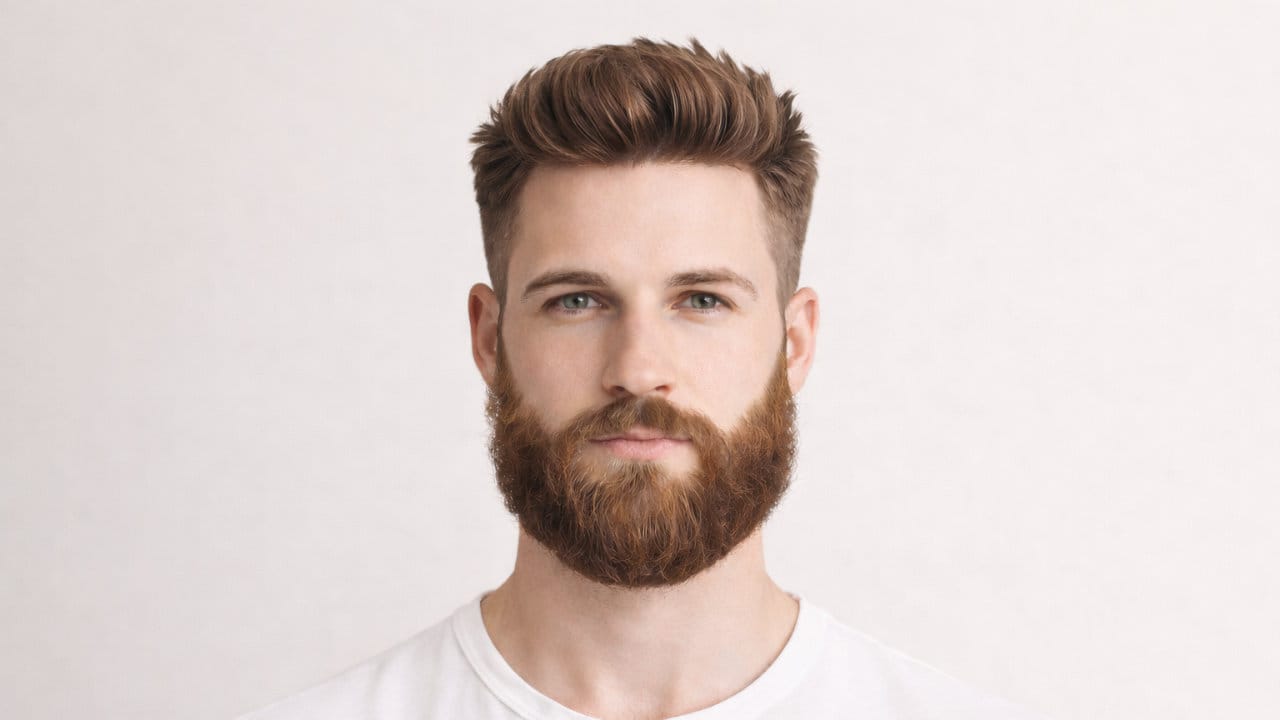
Reducing the side bulk slightly can make the biggest difference. Lowering the weight line narrows the outline without making the beard look thin.
Neckline height influences how shadows sit under the jaw and how the lower face is framed. A neckline set too low creates a soft, rounded shadow under the chin, which adds visual weight and shortens the appearance of the neck. For a slimmer look, the neckline should sit high enough to maintain a clean break under the jaw, while length builds from the chin rather than spreading into the neck.
Refining the cheek line helps stop the beard from spreading outward as it grows.
Keeping the moustache trimmed closer to the lip line, or subtly tapered at the edges, supports vertical flow instead of horizontal emphasis.
These changes work best together. Applied gradually, they look natural rather than deliberate.


