

Beard hair behaves differently from scalp hair, and the skin underneath it isn’t the same as the skin on your head. Once you understand those differences, it becomes much easier to see why beard wash and conditioner exist, and why they make sense rather than being dismissed as marketing.
This article explores how beard hair and facial skin actually behave. It explains how cleansing and conditioning products work, and offers practical guidance you can use without buying into exaggerated claims.
Beard Hair is Structurally Different from Scalp Hair
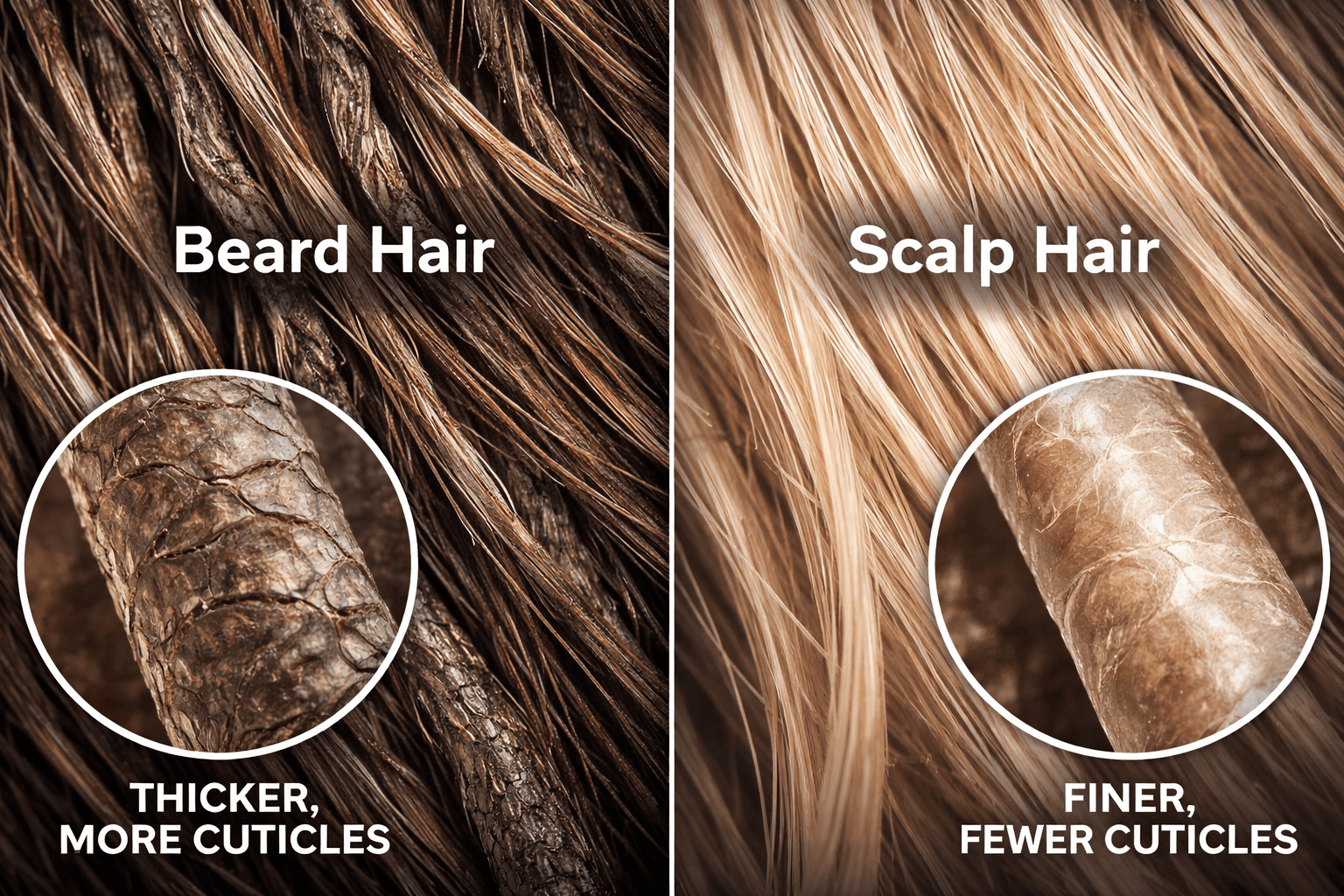
Hair fibres vary depending on where they grow on the body. Facial hair is usually thicker and more irregular in shape than scalp hair. It also has a heavier cuticle structure.
In many cases, beard hair has between five and ten cuticle layers. Hair from the scalp usually has fewer layers. These cuticles also sit at steeper angles along the hair shaft. This structure makes beard hair tougher and more resistant to breakage, but it also increases friction and moisture loss.
Beard hair dries out more easily and stretches less than scalp hair. This helps explain why beards often feel rough or brittle when dry, while head hair feels softer and easier to manage under similar conditions. These differences don’t mean beard hair is better or worse. They simply mean it reacts differently to washing and conditioning, and benefits from products that smooth the cuticle rather than strip away oil.
Facial Skin is More Sensitive than the Scalp
Facial skin is thinner and more sensitive than the skin on your scalp, produces less oil, and contains more sensory nerve endings. This is why irritation under a beard often shows up as itching. The scalp, by contrast, has a much higher density of sebaceous glands and can cope with heavier oil production, so brands formulate scalp products to clean more aggressively.
When people use those products regularly on their beards, they often remove too much oil from both the hair and the skin underneath. That is why proper beard skin care matters as much as how you wash the hair itself. Over time, this can lead to dryness, itching, and flaking, commonly called beard dandruff or beardruff. In some cases, dryness causes the flakes, while in others, a different skin issue may be involved.
Sebum and Beard Length Explain Why Dryness Increases
Sebum plays an important role in beard comfort. Facial sebaceous glands lubricate very short hairs, but they don’t produce enough oil to support long, coarse facial hair. As a beard grows longer, it pulls oil away from the skin and toward the ends of the hair. This process is often called the wick effect.
The wick effect leaves the skin under-lubricated and the hair tips dry. This explains why discomfort increases with length even when washing habits remain unchanged. Beard oils or lightweight conditioners help by replacing oil that the skin can no longer distribute on its own.
Flaking is Not Always Just Dry Skin
Not all flaking under a beard has the same cause. In some cases, flakes appear when harsh surfactants remove too much oil from sensitive facial skin. In other cases, the beard creates a warm, slightly moist environment. This allows naturally occurring yeast, particularly Malassezia, to thrive. Flaking in these cases may link to seborrheic dermatitis rather than simple dryness.
Balance matters. Beard cleansing needs to stay gentle, but it also needs to reach the skin and remove trapped oil and buildup. Washing too infrequently or rinsing poorly can allow microbial growth. Washing too aggressively can worsen dryness.
How Beard Wash and Conditioner Work
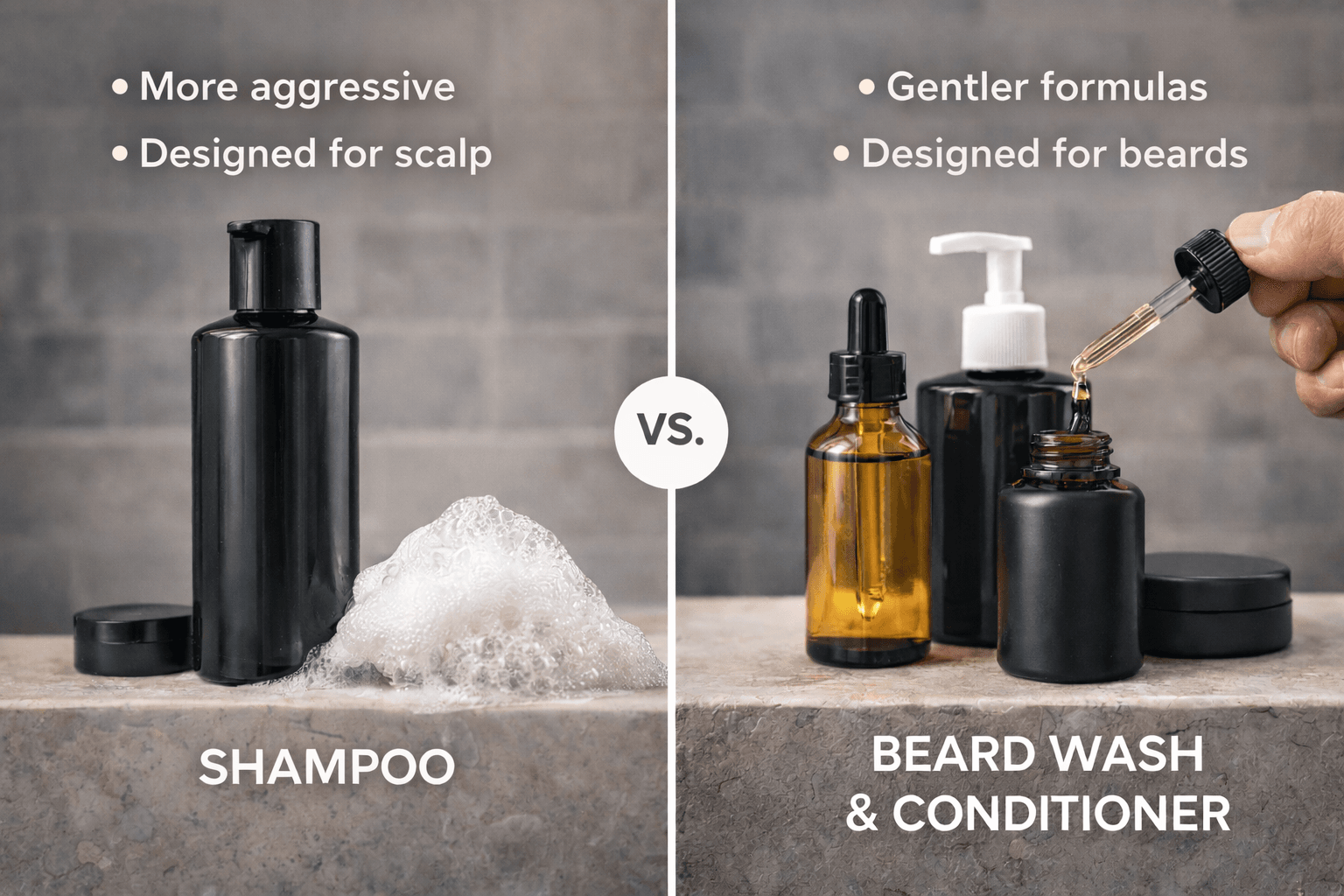
Shampoos clean by using surfactants, which lift oil, dirt, and buildup away from the hair and skin. Many regular shampoos target oily scalps, styling products, and frequent washing. This makes them more aggressive than beard hair and facial skin usually require.
Conditioners smooth the hair by coating the fibre and laying the cuticle flat. This reduces friction, improves softness, and makes hair easier to manage. This smoothing effect matters for beards because it reduces the scratchy feel many people notice. Most hair conditioners target scalp hair and are designed to be rinsed out. They often rely on heavier silicones such as dimethicone. On beards, these can feel greasy and may clog pores or irritate sensitive skin, especially with regular use. Beard conditioners usually use lighter formulations that hydrate without heavy coating and help avoid blocked pores.
When they’re made properly, beard wash and conditioner aren’t gimmicks. Brands design them to suit different hair structures and skin environments.
Everyday Factors that Affect Beard Comfort
Beards trap more than just hair. Oil, sweat, food particles, and odour-causing bacteria build up more easily than they do on the scalp. At the same time, the skin underneath dries out more quickly, especially as beard length increases. Good-quality beard washes are designed to clean both the hair and the skin underneath without stripping away too much oil. This lines up with what dermatologists generally recommend for facial skin covered by coarse hair.
Many beard products include ingredients such as argan oil, jojoba oil, or glycerin. These help support hydration by mimicking natural sebum or the skin’s natural moisturising factors, without the heavy feel that traditional hair conditioners often leave behind.
Water temperature also plays a role. Very hot water can worsen dryness and redness on facial skin. Lukewarm water is usually more comfortable and supports gentler cleansing overall.
What this Means in Real Life
There aren’t any large clinical trials that directly compare beard wash and normal shampoo under everyday conditions. Known differences in hair structure and skin biology still explain why beard-specific products exist.
Using normal shampoo on your beard occasionally is unlikely to cause problems. Many people do this without noticing immediate issues. Differences tend to appear with regular use, especially on medium and long beards, where dryness, itchiness, and rough texture become more noticeable over time.
A simple self-check is the towel test. If your skin feels tight after drying your beard, take note. White flakes appearing straight away are another sign. Both suggest the cleanser is too harsh for your facial skin.
Practical Guidance
If you keep a very short beard and wash it infrequently, you may not notice much difference between beard wash and regular shampoo. As the beard grows longer, issues such as itching, dryness, or flaking become more common. Switching to beard-specific wash and conditioner is likely to improve comfort and manageability.
The biggest improvements usually come from a few simple changes. Avoid harsh surfactants, use moderate water temperature, and keep the skin underneath hydrated. Beard conditioner can soften coarse hair and help lay the cuticle flat, which reduces itch and scratchiness. Lighter formulations tend to work better than heavy, silicone-based products designed for the hair on the head.
The Bottom Line
Beard wash and conditioner aren’t just marketing inventions, but science doesn’t support them with dramatic head-to-head clinical trials either. What research does show are clear biological differences between beard hair and facial skin compared with scalp hair and skin.
For many men, those differences become noticeable with regular use, especially with longer beards or sensitive skin. As with most grooming choices, the best test is personal experience. If itch, dryness, or beard flakes are a problem, adjusting how you wash and condition your beard is a low-risk and relatively inexpensive change that can make a real difference.
If you want to read related topics, you can visit our beard care section.