

Trimming and grooming are where most beards go wrong.
Not because men neglect them, but because they interfere too early, too often, and with the wrong expectations. A beard that looks uneven or untidy is often treated as a problem to be fixed immediately. Trimmers come out. Lines are sharpened. Length is reduced. The beard looks better for a day or two, then the same problems return.
Good beard grooming is not about constant correction. It is about knowing when to leave the beard alone and when light intervention actually helps. Most beards fail not because they were trimmed badly, but because they were trimmed before they were ready to behave.
This guide explains how to trim and groom your beard properly, why restraint matters more than precision, and how to keep control of your beard without resetting progress.
Grooming Is Not the Same as Trimming
One of the most common mistakes men make is treating grooming and trimming as the same thing. They are not.
Grooming is ongoing and preventative. It focuses on keeping the beard comfortable, manageable, and predictable day-to-day.
Trimming is corrective and occasional. It alters length, shape, or boundaries.
When trimming is used to solve grooming problems like itch, wiry texture, or unevenness, the beard usually becomes harder to manage, not easier. Most discomfort and awkwardness are growth-stage issues, not shape issues. Good grooming reduces the need to trim. Good trimming respects the stage the beard is in.
Why Early Trimming Stalls Progress
Early trimming feels productive. It creates immediate visual change, which is precisely why it is so tempting. It is also one of the fastest ways to stall progress.
During the early and mid stages of growth, beard hair is uneven by nature. Different areas grow at different speeds. Some hairs are active while others are resting. Density has not overlapped yet.
Men often describe feeling “stuck” at a certain length. In most cases, the beard is not stuck. It is being reset repeatedly by over-trimming. Trimming does not remove the awkward phase. It extends it.
If you are trimming every time the beard feels untidy, you are solving a short-term visual problem at the expense of long-term structure.
The Overlapping Principle: Length Creates Density
Beard density is rarely about how many hairs grow in one spot. It is a game of vertical coverage.
True density comes from hairs growing long enough to overlap slower or lighter areas. This is especially true on the cheeks, where growth often lags behind the chin and jaw. When you trim early for neatness, you are cutting away the very length required to create that overlap.
You are effectively thinning the beard in an attempt to make it look tidy.
Until the hair has reached a stage of settled density, any trim is a compromise on the beard’s future potential.
Growth Direction and Grain: The Gravity Factor
Beard hair does not grow straight down in uniform lines.
Growth direction varies by zone. Cheeks, jaw, chin, and neck often grow at different angles. Early in growth, these directions compete with each other, creating a bird’s nest appearance.
Trimming against the grain before growth patterns have settled exaggerates unevenness rather than correcting it. Length adds mass, and mass allows gravity to override the erratic angles of shorter, stiffer hairs. Until that point, trimming is working against physics rather than with it.
Many beards that feel unmanageable are simply being cut before they have enough mass to lie flat.
Perception Problems: Mirrors and Harsh Lighting
Many trimming mistakes are not caused by poor technique, but by poor assessment.
Most grooming decisions are made under harsh bathroom lighting, inches from a mirror. This exaggerates shadows, highlights patchiness, and makes minor unevenness look catastrophic.
A beard that looks imperfect at nose-to-mirror distance often looks perfectly normal at conversational distance. When trimming decisions are made under artificial scrutiny, over-correction and gradual line creep follow.
Most over-trimming decisions are made in conditions that no one else ever sees you in. If you only like your beard under one specific light or angle, the problem is not the beard. It is how you are judging it.
The Purpose of Grooming: Reducing Friction
The real purpose of grooming is not appearance. It is friction reduction.
Friction comes from dryness, tangling, and mechanical irritation of the skin under the beard. When that friction builds, men touch the beard more, adjust it more, and trim it more. This cycle is well understood in basic dermatological guidance, which consistently emphasises gentle handling and avoiding practices that inflame the skin beneath facial hair.
Effective grooming makes the beard easier to ignore. A beard that feels settled rarely needs attention. If your grooming routine requires constant fixing throughout the day, your approach is reactive rather than preventative.
Tools, Habits, and the Heat Factor
Tools amplify habits.
If your habits are impatient, better tools will simply help you interfere more efficiently.
The Hidden Danger of Electric Trimmers
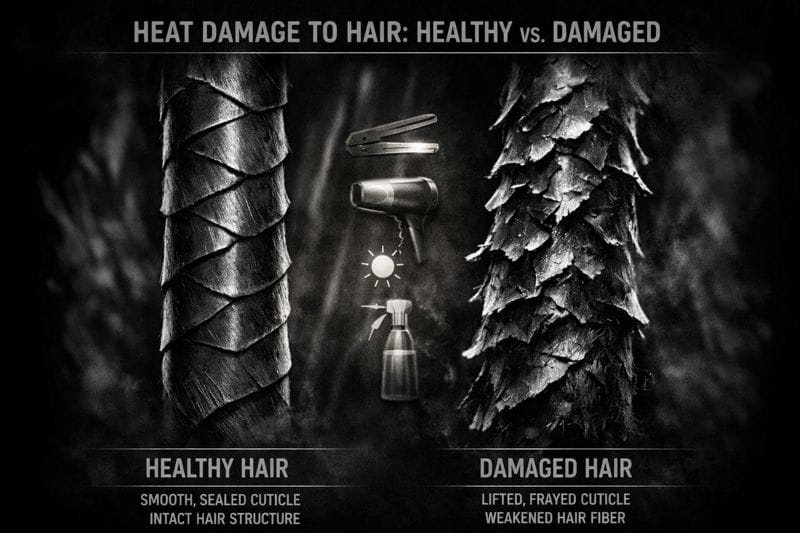
Electric trimmers generate heat through blade friction. When used repeatedly on a dry, unconditioned beard, this heat can contribute to micro-damage along the hair cuticle. The result is split ends and a fuzzy texture that men then try to fix by trimming again.
This creates a destructive loop.
If you use a trimmer, it should guide the hair, not fight it. Clean hair, light passes, and restraint matter more than blade sharpness.
The Neckline Myth: Structure vs Framing
Few topics cause more damage than the neckline.
Men are often taught to draw a sharp line early, usually too high along the jawline. This removes bulk from the area that provides structural support for the beard.
A neckline should support the beard, not frame it.
A line trimmed too high creates a floating beard that looks thin and disconnected from the side. Early in growth, the neckline often looks better left natural or lightly tidied at the very bottom. As length increases, the boundary becomes a structural necessity rather than a cosmetic one.

Why Sharp Lines Are Overrated
Sharp cheek lines and crisp edges photograph well. They rarely age well.
Hard lines draw attention to uneven density and exaggerate patchiness. They also require frequent maintenance, which leads to gradual line creep as you try to level the beard every few days.
Softer, natural edges allow the beard to evolve. They forgive uneven growth and reduce the need for constant correction. Control does not require geometric precision. It requires the appearance of health.
The Barber Reality Check
Professional barbers are skilled, but they work within practical constraints.
A barber cut is designed to optimise how a beard looks in the moment. It prioritises sharpness, symmetry, and immediate visual clarity. That makes sense in a chair, under lights, on a specific day.
Beard growth, however, operates on a longer timeline. What looks clean on day one can cost weeks of regrowth later. During a growth phase, it is often better to ask for obvious outliers to be tidied rather than for the beard to be shaped. A barber who is willing to say it is too early to trim is usually working with your long-term outcome in mind.
One approach preserves progress. The other quietly resets it.
Physical Handling and Mechanical Stress
Physical handling should be minimal.
Brushing and combing should guide hair direction and distribute natural oils. They should never feel aggressive. Pulling through knots or forcing shape leads to breakage and follicle irritation.
Habitual touching, stroking, or twisting is a form of mechanical stress. A beard that is groomed properly should feel comfortable enough to forget about. If you are constantly checking your beard, you are likely over-managing the environment.
Trimming as Maintenance, Not Design
Once the beard has reached a settled stage, trimming shifts from restraint to preservation.
At this stage, trimming is about preservation rather than progress. It helps to:
- Remove damaged split ends
- Maintain an established general shape
- Prevent bulk from becoming unbalanced
The goal is maintenance, not reinvention. Frequent redesign is usually a sign the beard is being forced to do something its biology does not support.
Common Grooming Mistakes
Most grooming problems follow predictable patterns:
- Trimming to relieve itch instead of addressing skin health
- Shaping to fix uneven growth before length exists
- Chasing symmetry before density has developed
- Using sharp lines to compensate for impatience
Each mistake creates more work and more frustration later.
The IronMane Position
Trimming and grooming are not about control. They are about timing.
Most men would benefit from trimming less, grooming more gently, and allowing length and mass to solve problems that tools cannot.
A beard should feel stable before it is shaped. It should feel predictable before it is refined. If grooming feels stressful, you are likely intervening too early or too often.
Where to Go Next
If trimming feels frustrating, reassess timing before technique.
If grooming feels endless, reduce frequency before upgrading tools.
Understanding How Beard Growth Works and The Awkward Phase makes trimming decisions clearer.
Good grooming is quiet.
Good trimming is occasional.
Most beards fail because they are never allowed to settle.