

Most beard problems do not start in the hair. They start underneath it.
Dryness, itch, flaking, redness, soreness, and ingrown hairs are signs that the skin under the beard is struggling to adapt to its environment. When that skin is unhealthy, beard growth feels uncomfortable, and maintenance becomes reactive rather than controlled.
This guide explains the most common skin problems under the beard, why they occur, and what actually solves them without overcorrecting.
Why Skin Under the Beard Behaves Differently: The Micro-Greenhouse Effect
The skin under a beard operates under very different conditions than exposed facial skin. As hair density increases, the beard creates a micro-greenhouse on the face.
Three changes matter most.
Occlusion. The beard traps heat and moisture while limiting airflow. Skin stays warmer and more humid for longer periods.
The sebum wick. Beard hair draws natural oils away from the skin surface and along the hair shaft. The skin dries while the hair feels oily, creating an imbalance.
The yeast trap. Warmth, trapped oil, and moisture feed Malassezia, a naturally occurring yeast. When overfed, it contributes to inflammation and flaking, commonly labelled as beard dandruff.
In practical terms, beard skin problems appear when this balance breaks down. Most issues come from stripping too much, washing too often, or reacting aggressively instead of early and calmly.
Common Skin Problems Under the Beard
Dryness and Tightness
Dry skin under the beard is often mistaken for poor hygiene. In reality, it is usually caused by over-washing or harsh cleansers.
When oils are removed faster than they can be replaced, the skin tightens and loses elasticity. Beard hair then feels rough or stinging even when clean.
Dryness is a signal to reduce interference, not increase it.
Beard Itch
Beard itch is a transitional skin response.
Short, sharp hairs irritate the surface while oil distribution is disrupted. Scratching inflames the skin and creates a feedback loop that extends irritation. Most beard itch resolves once the skin barrier stabilises and hair gains enough length to lie away from the face.
Flaking and Beard Dandruff
Flaking can come from dryness, but it is often caused by trapped shedding.
Skin cells that would normally fall away become caught at the base of the beard. Washing harder to remove flakes usually worsens the problem by inflaming the skin, triggering more shedding in response.
Flaking improves when irritation drops, not when scrubbing increases.
Redness and Sensitivity
Redness is a sign of ongoing inflammation.
Common triggers include hot water, aggressive exfoliation, frequent touching, and constant adjustment. Skin under a beard reacts faster because it is already warm and partially occluded.
Calming redness requires removing friction and letting the skin settle.
Ingrown Hairs
Ingrown hairs occur when hair curls back into the skin or becomes trapped beneath dead skin layers.
They are most common after close trimming or when the skin is too dry to allow hair to emerge cleanly. Forcing ingrown hairs out often causes more damage than leaving them alone.
Prevention matters more than correction.
What Actually Improves Skin Health Under the Beard
1. Wash Less, More Gently
Most beard skin problems improve when washing frequency is reduced.
Use a mild cleanser two to three times per week. On other days, rinse with lukewarm water only. Hot water and daily cleansing remove the oils the skin needs to regulate itself.
Clean skin is not stripped skin.
The hard-water factor. In hard-water areas, minerals can react with cleansers and leave residue on the skin. If flaking persists despite good habits, a final rinse with filtered or bottled water can help remove mineral build-up.
2. Hydrate the Skin Directly
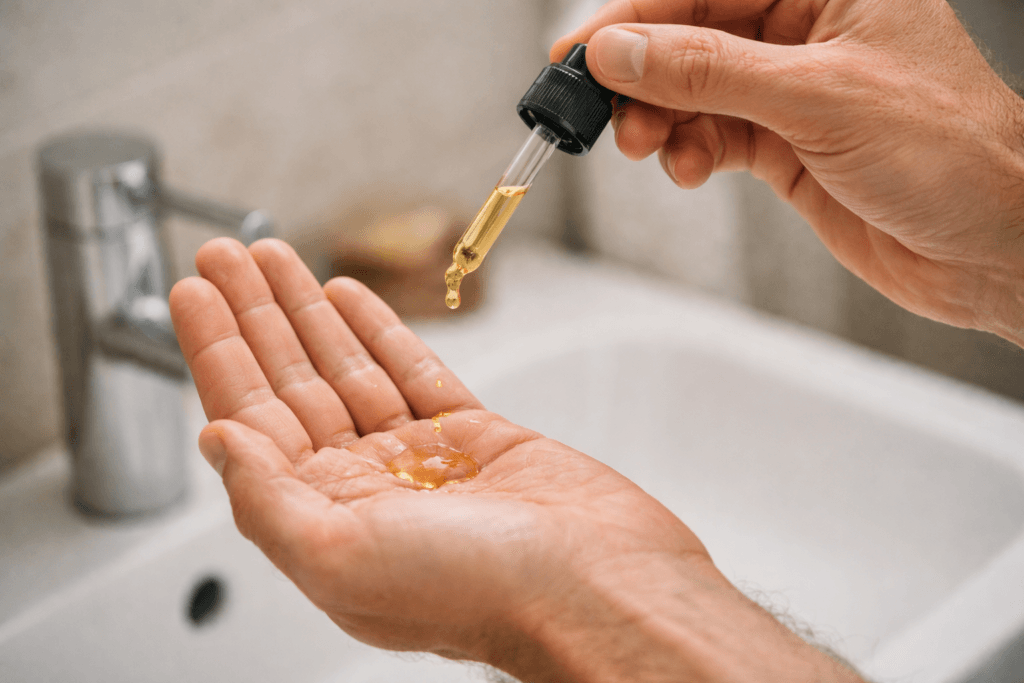
Beard oil is a skin supplement, not a hair perfume.
A small amount worked down to the skin restores flexibility lost to the sebum-wick effect. Apply while the skin is slightly damp to slow moisture loss.
Consistency matters more than quantity.
3. Clear Build-Up Without Scrubbing
Exfoliation under the beard should be minimal.
A soft-bristle beard brush can help lift trapped skin cells. Abrasive scrubs and daily exfoliation damage the skin barrier and increase sensitivity.
Healthy skin sheds naturally when it is not inflamed.
4. Stop Over-Managing the Beard
Every trim, adjustment, or constant touch adds friction.
Allowing the beard to grow through the early stages with minimal interference gives the skin time to adapt to its new environment. Skin health improves fastest when routines are boring and predictable.
Advice That Often Makes Skin Problems Worse
Some common grooming advice reliably backfires.
Daily exfoliation increases inflammation. Scalp shampoos strip facial skin. Frequent trimming re-sharpens hair tips and resets irritation. Hot showers dilate blood vessels and remove protective oils.
Skin under the beard responds best to restraint, not intensity.
When Skin Problems Need More Attention
Most beard skin issues are habit-driven and temporary.
If redness, soreness, or flaking is severe or spreading beyond the beard area, simplify your routine first. Adding more products rarely solves problems caused by over-intervention.
The IronMane Position: Stability Over Perfection
Healthy skin is the foundation of a healthy beard.
Once the skin under the beard stabilises, maintenance becomes easier and more predictable. Washing settles, irritation fades, and hair quality improves without constant correction.
Skin health under the beard is about balance. When the skin barrier is intact, most beard problems disappear without effort. Consistency, patience, and restraint do more than any product ever will.