

Most men choose between beard oil and beard balm based on habit, scent, or whatever bottle looks the most “rugged” on the shelf. That approach usually leads to the same midday frustrations: a beard that’s too greasy, too stiff, or one that looks great at 8:00 AM but has deflated into a frizzy mess by lunchtime.
Beard oil and beard balm are not competing products. They are different tools, built on different structures, designed to solve different mechanical problems. Once you understand the mechanics of the formula, the choice becomes obvious.
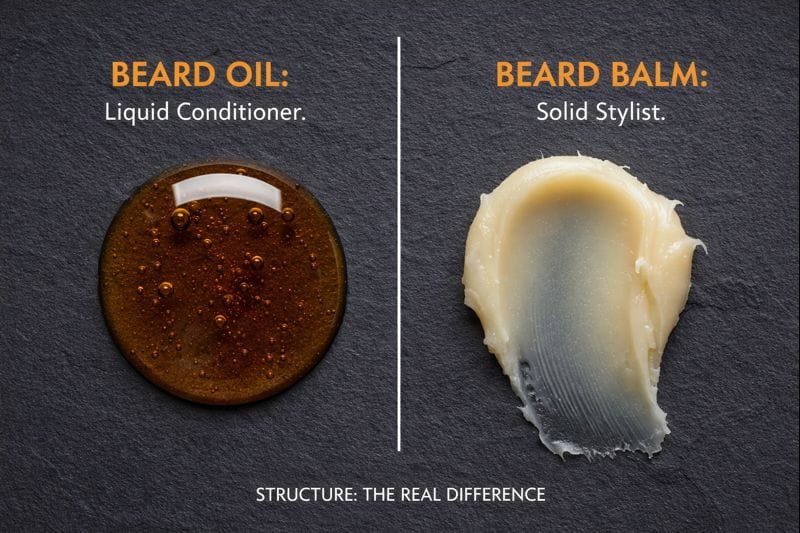
The Real Difference Is Structure, Not Branding
Ignore the names and the marketing copy. The difference between oil and balm comes down to structure and behaviour. Specifically, how the base behaves once it hits your hair and skin.
One is a lubricant. One is structural support. Everything else flows from that.
What Beard Oil Is Actually For
Beard oil is a liquid conditioner. Nothing more, nothing less. Its base is almost entirely oils, ideally chosen to mimic your skin’s natural sebum, reduce friction, and improve flexibility.
Used properly, beard oil does three things that matter in practice:
- Reduces dryness and the beard itch associated with new growth
- Improves softness and bend in the hair
- Acts as mechanical protection against breakage
This matters because beard hair is significantly coarser than scalp hair. It does not just need to look good. It needs to be pliable so it does not snap when you brush it or move your face.
IronMane Insight: Oil is a sealer, not a soak. Oil does not hydrate hair. It reduces moisture loss. If you apply oil to bone-dry hair, you are just lubricating a problem. You need water for hydration. You need oil to keep it there.
Where Beard Oil Falls Short
Beard oil has zero memory. Because it contains no waxes or structural agents, it cannot hold flyaways or maintain a specific shape.
Trying to force beard oil to do a styling job is how beards end up looking limp and greasy. You keep adding more products, searching for control that the formula simply cannot provide.
What Beard Balm Is Built To Do
Beard balm starts with oils, but it adds waxes, usually beeswax, and often butters like shea or cocoa. This changes how the product behaves on the beard.
Beard balm is designed to:
- Add weight to unruly hair
- Form an occlusive layer that stays put longer than oil
- Provide a mild, flexible hold
Think of balm as a conditioning styler. Oil can migrate onto your shirt collar or phone screen. The wax in the balm helps the product stay anchored to the hair.
The Trade-Off: Control Versus Comfort
The moment you add wax, you introduce compromise. Waxes give you control, but they also increase stiffness.
A well-balanced balm offsets the wax with enough oil to keep hair pliable. A poorly formulated one, usually heavy on wax and light on slip, will leave your beard feeling rigid, tacky, and uncomfortable within hours.
IronMane Insight: Most beards need restraint, not rigidity. Unless you are styling a competition moustache, you do not want it stiff. You want it guided.
Which One Should You Use?
The decision changes as length, density, and friction increase.
Short Beards and Stubble
Oil is the priority. At this stage, you are conditioning the skin and managing itch. Balm adds unnecessary weight to hair that is not long enough to be guided yet. Balm on stubble is overkill. You’re just putting wax on your skin, which is a fast track to clogged pores and breakouts.
Medium to Long Beards
This is where balm earns its place. As length increases, so does surface area for moisture loss and the tendency for flyaways.
Coarse or Unruly Beards
Balm provides the weight needed to guide hairs that want to stick straight out, but only if the formula is balanced.
The Layering Technique
You do not have to choose. For longer beards, using both is often the more effective approach.
Oil first. Apply a small amount to the skin and the roots of the hair while the beard is slightly damp. This handles conditioning and seals in moisture.
Balm second. Scrape out a small amount, melt it between your hands, and apply it to the exterior of the beard.
The oil handles the biology. The balm handles the structure.
The Takeaway
Beard oil conditions. Beard balm conditions and controls.
Neither is better. They are simply different tools for different phases of the job. When you stop choosing based on scent or labels and start choosing based on structure, your beard stops fighting you.
That is the point of a professional approach to grooming.